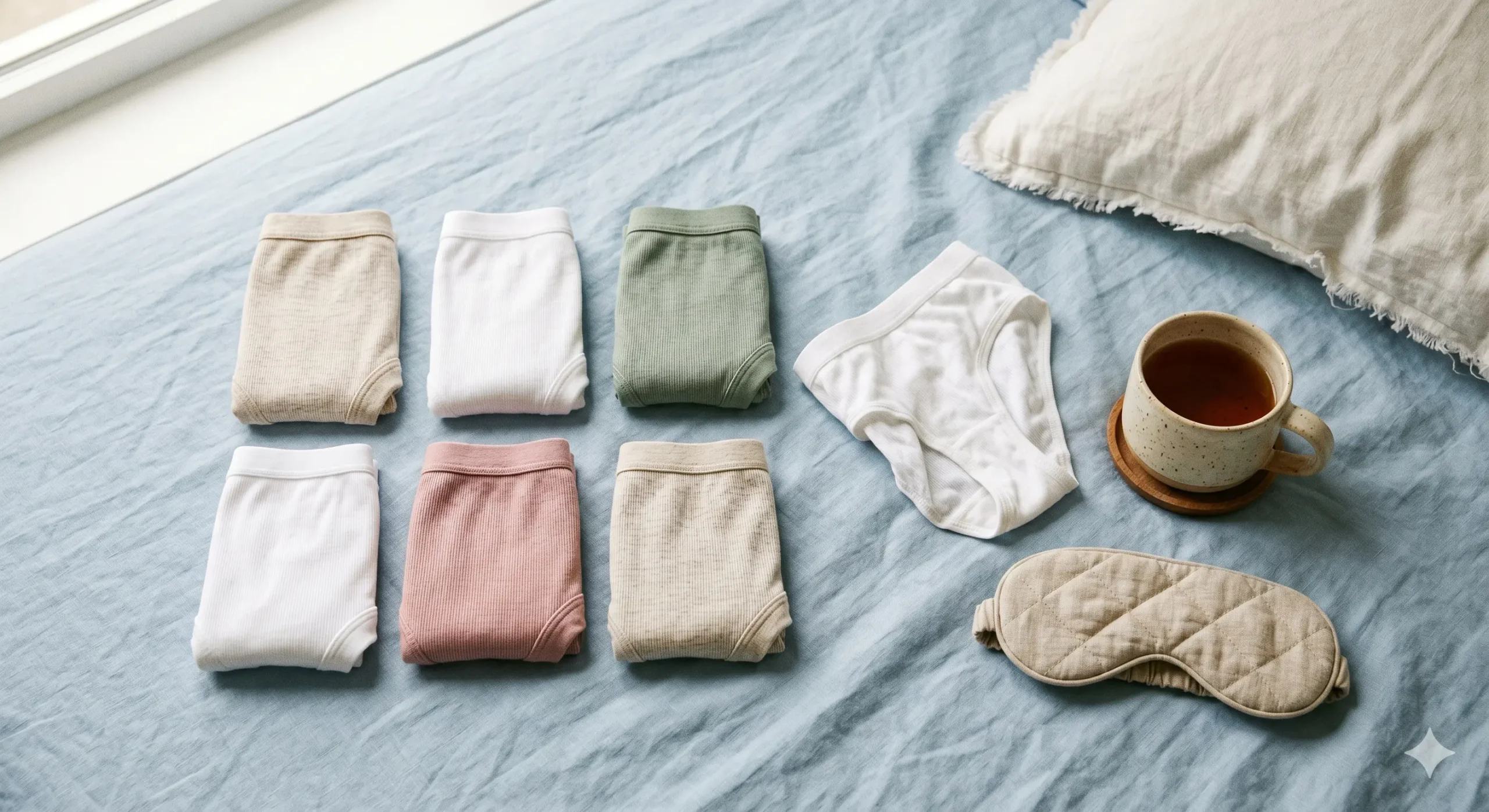
Everyone has an opinion. Your mum has an opinion. Your mates down the pub have a loud, unsolicited opinion. There’s probably a bloke on TikTok in a lab coat who isn’t a real doctor also weighing in. But when it comes to the genuinely important question of should you wear underwear to bed, most of us are just winging it based on whatever our parents told us when we were twelve.
So let’s actually settle this. We’ve dug through the medical advice, consulted what the OB-GYNs and urologists are saying, and boiled it all down into something useful. Whether you’re team commando, team cotton briefs, or team “I’ve never thought about this in my life and now I can’t stop,” this one’s for you.
So, should you wear underwear to bed? (The short answer)
The medical consensus? Both options are fine. (Anticlimactic, we know. Sorry.)
Most OB-GYNs agree there’s no hard medical rule either way. Going commando is often cited as the “healthiest” option because it lets the area breathe after being trapped in fabric all day like a sad little burrito. But wearing the right kind of underwear to bed is also completely fine and won’t send you to A&E.
The real answer depends on three things: fabric, fit, and what’s going on with your body at the moment. Tight synthetic knickers every night? Not ideal. Loose cotton ones? Crack on.
Verdict: If you’re going to wear something, make it breathable and comfortable. If you’re going to wear nothing, wash your sheets more often. (Seriously, we’ll get to the sheets thing. It’s important. You’ve been warned.)
Benefits of going commando to bed
Let’s start with the case for freedom. Sleeping naked from the waist down (or entirely, if you’re feeling brave) has actual, evidence-backed perks.
Better airflow, fewer infections. Bacteria and yeast love warm, damp environments. Your crotch after eight hours in cotton leggings is essentially a tropical resort for them. Letting everything air out overnight reduces the risk of bacterial and fungal growth, which your future self will thank you for.
Happier vaginal health. OB-GYNs often recommend going commando specifically because it allows the vagina to “breathe” after being compressed all day. (Yes, “breathe” is in quotes. No, vaginas don’t have lungs. Calm down.)
Less chafing and irritation. That elastic waistband leaving a red imprint on your hip? That’s low-grade skin trauma every night. Going without means no pressure, no rubbing, no mystery marks.
Possibly better sleep. A lot of people report sleeping more comfortably without underwear, probably because there’s one less thing tugging, twisting, or riding up at 3 a.m.
One catch: if you’re going commando, please wash your sheets more regularly. Weekly at minimum. We’re not going to explain why. You know why.
Reasons you might want to wear underwear to bed
Now the case for pants. (The British kind. Knickers. Underwear. You know what we mean.)
Comfort against scratchy bedding. If your sheets are more “budget hotel” than “Egyptian cotton,” underwear is a helpful buffer.
A hygiene barrier. Underwear catches sweat, discharge, and whatever else your body does overnight, which means your sheets and pyjamas stay cleaner for longer. This is especially relevant if you’ve been slacking on laundry day (no judgement, it’s a universal struggle).
Period protection. Period pants exist, they’re brilliant, and they’ve saved more mattresses than we can count. If you’re menstruating, wearing underwear (with or without a pad) is just practical.
Managing discharge. Heavy or irregular vaginal discharge is easier to deal with when there’s a layer of cotton catching it rather than it going directly onto your bedding.
Night sweats. If you run hot, moisture-wicking underwear can actually help regulate temperature better than nothing at all. Counterintuitive, but true.
Modesty and practicality. Live with flatmates? Have kids who burst into your room at dawn? Might need to run from a house fire in dignity? Underwear is the sensible choice.
What’s the best underwear to wear to bed?
Okay, so you’ve decided to wear something. What should it be? Not all underwear is created equal, and some options are basically guaranteeing you a yeast infection.
Best fabrics for sleeping
Cotton. The gold standard. Breathable, absorbent, soft. About as close to going bare as you can get while still technically wearing something.
Micro modal. Ultra-soft, cloud-like, a lovely second-skin option if you find cotton a bit rough.
Nylon mesh or quick-dry. Great for hot sleepers or athletes who sweat through everything. Designed to wick moisture away instead of trapping it.
Fabrics to avoid at night
Polyester and rayon. Trap moisture and heat like a personal greenhouse. Your groin doesn’t want to be a greenhouse. Trust us.
Lace. Beautiful, yes. But also scratchy, friction-prone, and responsible for more ingrown hairs than anyone talks about publicly.
Silk. Looks glamorous, performs terribly. Doesn’t let moisture escape, which defeats the entire purpose of wearing breathable underwear to bed.
Best styles
Go for briefs, boyshorts, or loose boxers. Full coverage, minimal restriction, maximum breathing room.
Avoid thongs at all costs. We cannot stress this enough. Thongs can physically shuttle bacteria from the rectal area to the vagina, which is a leading cause of Bacterial Vaginosis (BV). A thong at night is basically running a bacterial Uber service across your own body. Please don’t.
And whatever style you pick: loose over tight. Tightness traps heat and moisture, which is the whole problem we’re trying to avoid.
Should men wear underwear to bed?
Good question, and one the internet weirdly ignores (most articles on this topic pretend men don’t also have genitals). The principles are broadly similar, but with a couple of male-specific wrinkles.
Going commando may be marginally better for sperm health. The testicles are external for a reason: they like to be slightly cooler than the rest of the body. Tight underwear all day and all night can raise scrotal temperature, which some research links to reduced sperm quality. If you and your partner are trying to conceive, letting things hang free overnight is a small, easy win.
If you do wear underwear: loose cotton boxers are the move. Breathable, cool, non-compressive.
What to avoid: tight synthetic briefs or compression shorts. Great for the gym, suboptimal for eight hours of sleep. You’re essentially shrink-wrapping the boys, which is neither comfortable nor advisable.
Side effects of not wearing underwear as a bloke? Honestly, minimal, assuming you’re washing your bedding regularly. The main risk is a slightly increased skin-to-sheet contact, which is only a problem if your sheets are grim. (Wash your sheets. We’re begging you.)
Special scenarios: what to do if…
Life is complicated. Sometimes “just wear cotton” isn’t specific enough. Here’s the advice for the trickier situations.
Should you wear underwear to bed with a UTI?
Wear loose cotton underwear. Counterintuitively, going fully commando isn’t always recommended here because some gentle coverage can help keep the area clean and contained. The key is breathability: cotton, loose fit, nothing that traps moisture. Also, drink water. So much water. (Not because of the underwear. Just generally.)
Should you wear underwear to bed with a yeast infection?
Go commando if you can, or wear very loose cotton. Yeast thrives in warm, damp environments, so the absolute priority is reducing moisture. Ditch anything synthetic for the duration. Your GP will tell you the same thing, probably with slightly less enthusiasm than we are.
Should you wear underwear to bed when pregnant?
Breathable cotton underwear is your friend. Pregnancy often comes with increased discharge, and comfortable cotton knickers help manage that while keeping you comfortable. Go up a size if your usual pairs are getting tight. Your bump isn’t going to compromise. Neither should your waistband.
Should you wear underwear to bed during your period?
Yes, one hundred percent. Period pants are a genuine modern miracle, and even if you don’t have a pair, regular cotton underwear with a pad provides the extra security you need to sleep without constantly worrying about your sheets. This is not the night to go commando. That’s a learning experience nobody needs twice.
Frequently asked questions
Not inherently. Problems mainly arise from what you’re wearing, not whether you’re wearing anything. Tight, synthetic, non-breathable underwear worn every night can contribute to irritation and infection risk. Loose cotton? Fine forever.
Extremely normal. Roughly half of people do. The other half are smug about it on the internet. Both groups are correct.
Yes, actually. Persistent friction combined with trapped moisture can contribute to darkening of the skin in the groin area over time. It’s called friction-induced hyperpigmentation, and it’s reversible in most cases by switching to loose, breathable fabrics. Another point for cotton.
Entirely personal preference. Loose cotton knickers are completely fine and offer hygiene benefits. Tight synthetic knickers every night are genuinely worth reconsidering. Thongs to bed? Please no.
Marginally, yes, for most people. The health benefits of airflow are real but also pretty modest. If wearing underwear helps you sleep better, feel more secure, or manage a specific issue, the benefits of wearing it outweigh the tiny edge of going without.
The bottom line
Look, this isn’t a life-or-death decision. It’s pants. It’s literally just pants.
Both options are medically fine. Going commando has a slight edge for genital airflow and reduced infection risk, particularly for people prone to yeast infections or UTIs. Wearing underwear has the edge for comfort, hygiene, period security, and not flashing your flatmate during a midnight snack run.
The actual rule that matters: if you wear underwear to bed, make it loose, breathable, and preferably cotton. Skip the lace, skip the thongs, skip anything synthetic. And whatever you choose, wash your sheets regularly.
That’s it. That’s the whole article. You may now sleep soundly, with or without knickers, knowing you’ve made an informed choice. Congratulations. You’re welcome.
(Medical disclaimer: this article is for general information and isn’t a substitute for advice from your actual doctor, who has seen your actual body and knows things we don’t. If you have persistent infections, unusual symptoms, or specific health concerns, go see them. They won’t judge you for asking about underwear. Probably.)
Leave a Reply